
Memory across channels
How phone calls, web calls and chat, and WhatsApp share one memory of each caller, and how callers are recognized.
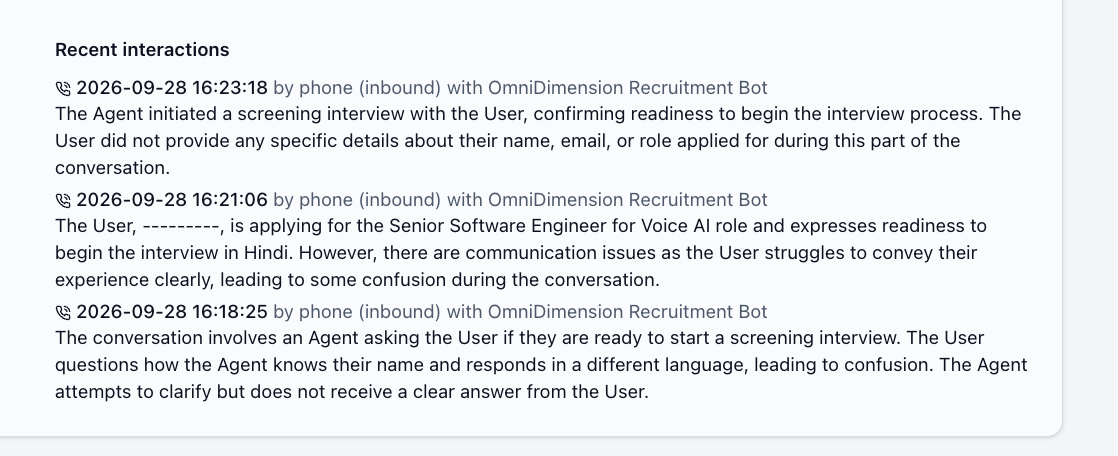
A caller has one memory per Memory pool, whichever way they reach you. What they tell your phone agent is known to your WhatsApp assistant on the same pool, and the other way round.
How callers are recognized
| Channel | Recognized by |
|---|---|
| Phone calls (inbound and outbound) | Phone number |
| Phone number | |
| SMS | Phone number |
| Web calls and web chat | Email address, when your page provides one |
The same phone number is the same person across calls, WhatsApp, and SMS, whatever format it
arrives in. A web visitor is recognized when your page passes their email address as
email, user_email, customer_email, or contact_email. Without an email, a web
conversation is not remembered.
When a conversation carries both a phone number and an email, the caller's record gains the one it was missing. If the two point at different records, nothing is merged automatically; the caller is flagged as an identity conflict for you to review. See View and manage memory.
Phone and web calls
- Returning callers are greeted naturally. Instead of the standard welcome message, the agent recognizes the caller, refers to one thing from last time, and moves the conversation forward. Your welcome message is still used as a guide for tone and content.
- Recent WhatsApp messages come along. Messages exchanged since the memory was last updated are shown to the agent with their times, so a call right after a chat already knows what was said.
- The memory is updated after the call, together with any WhatsApp messages waiting to be added.
- Every reply knows the caller. The WhatsApp assistant reads the caller's memory before each reply, so it can use what was said on a call yesterday.
- Messages are kept word for word until they are added. Once enough new messages have built up, including your templates and your team's replies, they are folded into the memory. A call in the meantime folds them in straight away.
- A newer call wins. If the caller called after the last chat message, the next reply follows the call.
- Templates and your team's messages count. If you send a template and the caller replies "OK, thanks", the memory records that they received it.